

Table of Contents
Pilot Loss of License Insurance: 5 Proven Ways to Secure Pilot Loyalty is one way that The aviation industry is currently navigating a complex era of human capital management. While technical advancements in avionics and airframe design continue to move at a rapid pace, the fundamental pillar of any flight operation remains the pilot. However, the profession carries a unique, inherent risk: the sudden and often permanent loss of a medical certificate. For a pilot, their health is not just their well-being; it is their license to practice their profession. This is why Pilot Loss of License Insurance has transitioned from a niche benefit to a cornerstone of modern retention strategies.
In an environment where poaching is common and the costs of training a new type-rated captain can exceed six figures, loyalty is the ultimate currency. If an operator can provide a safety net that protects a pilot’s livelihood against medical disqualification, they create a psychological bond that far outweighs a simple signing bonus.
Here are five proven ways to leverage Pilot Loss of License Insurance to secure long-term pilot loyalty.
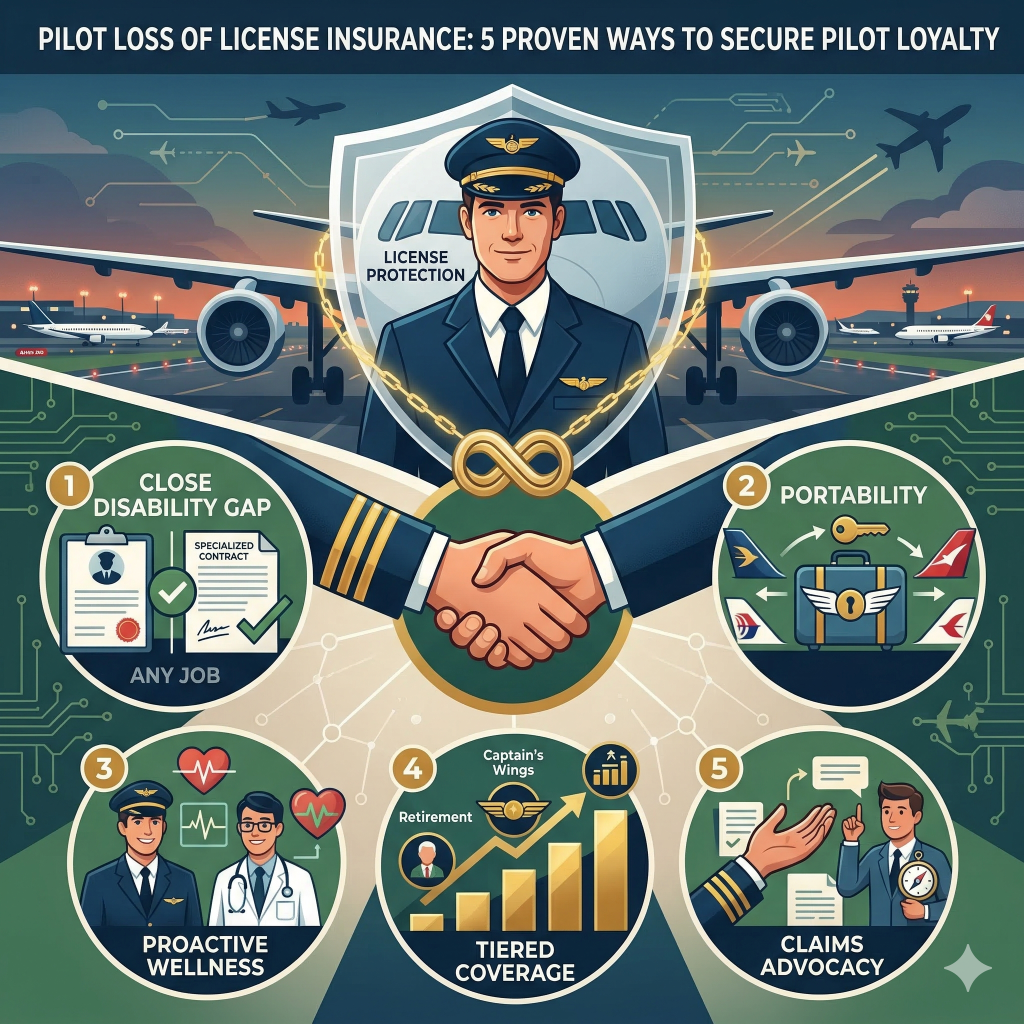
1. Close the “Benefit Gap” in Standard Disability
Most corporate or commercial group disability plans are designed for “any occupation.” This means if a pilot can no longer fly due to a minor vision impairment or a cardiovascular condition, but can still work a desk job, the standard insurance often stops paying.
To a pilot, a desk job is not a career equivalent. By offering a specialized Pilot Loss of License Insurance policy that features an “Own Occupation” definition, you demonstrate a profound understanding of their specific career risks. When a pilot knows that their employer has protected their specific ability to earn as a professional aviator—not just as a general employee—their commitment to that organization deepens.
2. Use “Portability” as a Trust-Building Tool
One of the primary fears pilots have regarding employer-sponsored benefits is the “golden handcuffs” effect. However, irony dictates that the more “open” and fair a benefit feels, the more likely a pilot is to stay.
Providing a Pilot Loss of License Insurance plan that offers a degree of portability—or at least a generous conversion option—shows that the company cares about the individual’s long-term career stability, regardless of the tail number they are flying. This transparency builds a culture of mutual respect. Pilots are highly networked; when word spreads that a company provides a robust Pilot Loss of License Insurance policy that doesn’t disappear the moment a contract is restructured, that company becomes a “destination employer.”
3. Integrate Insurance with Proactive Wellness
Loyalty isn’t just about paying out when things go wrong; it’s about preventing the “loss” in the first place. High-tier Pilot Loss of License Insurance providers often include access to specialized aviation medical examiners (AMEs) and confidential wellness programs.
By framing Pilot Loss of License Insurance as part of a “Flight Surgeon Support System,” you move the conversation from insurance to advocacy. If a pilot feels that the company is providing the tools to help them maintain their Class 1 Medical, they view the employer as a partner in their longevity. This proactive approach reduces the turnover caused by medical retirement and keeps your most experienced captains in the left seat longer.
4. Tiered Coverage as a Career Milestone
A common mistake in aviation HR is offering a “one-size-fits-all” benefit package. To maximize loyalty, Pilot Loss of License Insurance should be structured to grow with the pilot’s career.
For a First Officer, the focus should be on a base monthly indemnity to cover short-term medical issues, providing immediate peace of mind for new hires. As they promote to Captain, the policy should transition to include lump sum payouts for permanent loss of license, protecting their peak earning years. Finally, for Senior Pilots or Check Airmen, the plan can include full salary replacement and a retirement bridge. When Pilot Loss of License Insurance benefits increase at year five or year ten, it creates a tangible reason for the pilot to stay. It transforms the insurance from a static line item into a rewarded milestone of their dedicated service.
5. Simplify the Claims Advocacy Process
The period following a medical grounding is the most stressful time in a pilot’s life. If they have to fight through layers of bureaucracy to access their Pilot Loss of License Insurance benefits, the “loyalty” the company hoped to build will evaporate instantly.
To truly secure loyalty, the employer should provide a dedicated claims advocate or a streamlined interface with the insurer. When an operator says, “We will handle the paperwork so you can focus on your recovery,” they earn a level of gratitude that a salary increase cannot buy. High-fidelity Pilot Loss of License Insurance programs that pay out promptly and without adversarial hurdles become the “hero” of the pilot’s personal story, and by extension, so does the company.
The Financial Reality of Pilot Retention
From a purely fiscal perspective, the premiums paid for Pilot Loss of License Insurance are a fraction of the cost of recruitment. A single hull loss or a series of canceled flights due to manning shortages costs significantly more than a comprehensive group insurance plan.
Beyond the numbers, there is the “hangar floor” reputation. Pilots talk. In flight decks across the globe, the quality of a company’s Pilot Loss of License Insurance is a frequent topic of conversation. Being the company that “takes care of its own” during a medical crisis is the most effective marketing strategy a flight department can have.
Conclusion: A Safety Net for the Modern Aviator
The sky is an unforgiving workplace, and the medical standards required to navigate it are stringent. Pilots are acutely aware that they are one EKG or one eye exam away from the end of their career. By providing a robust Pilot Loss of License Insurance solution, you are not just offering an insurance policy; you are offering a promise of stability.
In the battle for talent, the winner won’t just be the one who pays the most per flight hour, but the one who offers the most security for the hours when the pilot is grounded. Investing in Pilot Loss of License Insurance is an investment in the very soul of your flight operations—your people.