Table of Contents
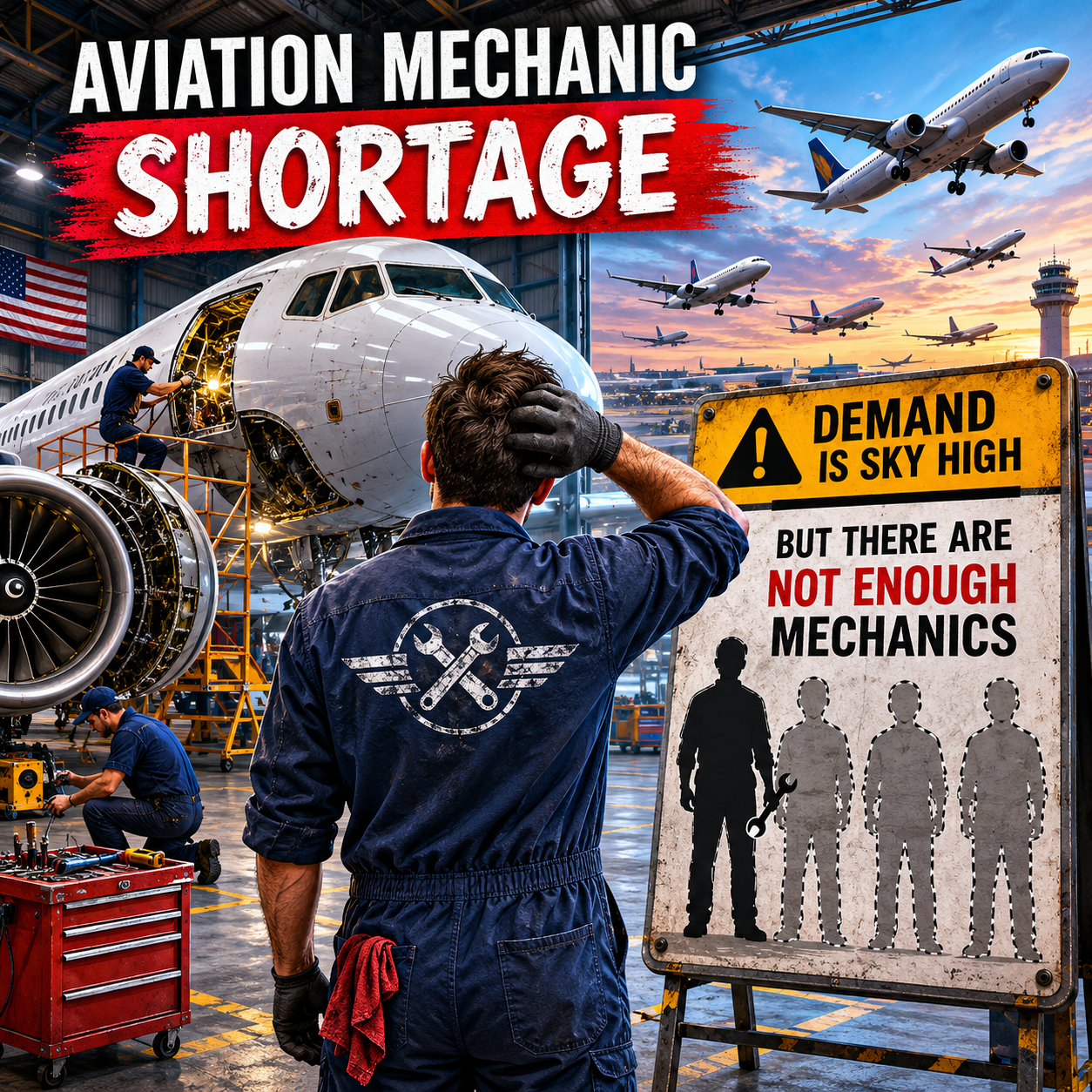
The aviation mechanic shortage has become one of the most urgent workforce challenges facing airlines, MROs, business aviation operators, and OEM service centers. With retirements accelerating, training pipelines lagging, and fleet complexity increasing, the gap between maintenance labor supply and demand is widening at a pace that threatens operational reliability, cost control, and long‑term industry growth. This article breaks down the root causes of the aviation mechanic shortage and provides actionable hiring solutions for employers navigating this tightening labor market.
Understanding the Mechanic Shortage
Scale and Industry Impact
The aviation mechanic shortage is not a temporary fluctuation—it is a structural imbalance. Industry analysis shows that retirements, attrition, and limited training throughput are creating a projected shortfall of approximately 60,000 aviation maintenance technicians by 2029, representing a 20% gap below industry needs . This shortage is already driving up labor costs, extending turnaround times, and increasing maintenance backlogs across airlines and MROs.
Aviation Mechanic Shortage: A Generational Cliff
One of the most significant drivers of the aviation mechanic shortage is the demographic shift reshaping the workforce. A large portion of certificated A&P mechanics entered the industry during the deregulation era and are now approaching retirement. As these senior technicians exit, they take with them decades of tacit knowledge—skills that cannot be quickly replaced by new graduates .
Training Pipeline Limitations
Despite increased awareness, the number of newly certificated A&P mechanics entering the workforce each year remains insufficient. FAA certificate issuance data consistently shows that training output is not keeping pace with retirements or expanding fleet maintenance requirements . Traditional two‑year programs delay workforce entry, while accelerated programs—though faster—still cannot close the gap alone.
Root Causes of the Aviation Mechanic Shortage
A Shortage Driven by Retirements and Attrition
Early Retirements and Pandemic‑Era Exits
The COVID‑19 pandemic accelerated early retirements and job cuts, shrinking the experienced technician pool. Many senior AMTs did not return, deepening the aviation mechanic shortage .
Attrition to Higher‑Paying Industries
Technicians with mechanical, electrical, or avionics skills are increasingly recruited by automotive, energy, defense, and tech sectors. These industries often offer more predictable schedules and competitive pay, pulling talent away from aviation and worsening the aviation mechanic shortage .
Aviation Mechanic Shortage Caused by Training Capacity Constraints
Limited Part 147 School Output
Part 147 schools continue to graduate students, but not at a rate sufficient to offset retirements. The training pipeline simply cannot meet the accelerating demand for certificated mechanics .
Long Time‑to‑Certification
Traditional A&P programs often require two years or more, delaying workforce entry. Accelerated programs can produce certificated mechanics in eight months, allowing earlier entry into a high‑demand labor market—but capacity remains limited .
Aviation Mechanic Shortage Intensified by Fleet Growth and Complexity
Higher Utilization and Aging Aircraft
Airlines are flying higher utilization schedules than ever before, while simultaneously operating aging fleets that require more frequent and more complex maintenance. This increases demand for skilled labor and amplifies the shortage.
Technological Complexity Outpacing Training
Modern aircraft incorporate advanced avionics, composite materials, and digital systems. Training programs struggle to keep pace with these technologies, widening the skills gap and contributing to the aviation mechanic shortage .
The Shortage is Also Driven by Wage Inflation and Labor Competition
Rising Wages Reflect Supply‑Demand Imbalance
Competition for certificated mechanics has driven wages upward nationwide. Experienced airline mechanics frequently earn six‑figure compensation through base pay, overtime, and shift differentials, reflecting the severity of the aviation mechanic shortage .
Mobility and Poaching Across Operators
Airlines, MROs, and business aviation operators increasingly compete for the same limited pool of technicians. This mobility intensifies hiring challenges and accelerates wage escalation.
Hiring Solutions for 2026
Mechanic Shortage Solutions Through Workforce Development
Build Internal Training Pipelines
Leading MROs are partnering with training institutions and creating in‑house academies to expand the talent pipeline. These programs reduce dependency on external training capacity and help stabilize staffing levels .
Accelerate Time‑to‑Proficiency
Employers can shorten the learning curve by offering structured skill‑building programs, mentorship, and hands‑on training. This approach increases productivity and mitigates the aviation mechanic shortage by maximizing internal capacity.
Aviation Mechanic Shortage Solutions Through Productivity Improvements
Improve Planning and Preparatory Processes
Raising technician productivity to best‑quartile levels could mitigate over 80% of the projected 2029 shortage, according to industry analysis . Improvements include:
- Better parts and tooling availability
- Aligning shift schedules with aircraft arrivals
- Ensuring technicians are qualified for assigned tasks
Implement Digital and AI Tools
Digital workflow systems, predictive maintenance analytics, and AI‑driven planning tools can increase wrench time by 15–35%, significantly reducing the operational impact of the aviation mechanic shortage .
Aviation Mechanic Shortage Solutions Through Competitive Hiring Strategies
FIND AN AVIATION MECHANIC JOB TODAY AT AVIATIONEMPLOYMENT NETWORK!
Strengthen Employer Value Proposition
To attract and retain technicians, employers must offer:
- Competitive wages
- Predictable schedules
- Clear advancement pathways
- Strong safety culture
These factors are increasingly decisive for candidates evaluating opportunities in a tight labor market.
Recruit Earlier and More Aggressively
Engaging high school students, military veterans, and career‑transition candidates expands the talent pool. Early outreach helps counteract the demographic forces driving the aviation mechanic shortage.
Conclusion
The mechanic shortage is reshaping the maintenance workforce across airlines, MROs, and business aviation. Driven by retirements, training bottlenecks, fleet complexity, and labor competition, the shortage is projected to intensify through 2029. However, employers can mitigate its impact through strategic workforce development, productivity improvements, competitive hiring practices, and investment in training pipelines. Organizations that adapt now will be best positioned to maintain operational reliability and secure the skilled technicians essential to aviation’s future.