Transactional vs. Strategic Aviation Recruitment
Table of Contents
The aviation industry is evolving at a pace that traditional hiring models can no longer match. As workforce shortages intensify and competition for specialized talent grows, organizations are re‑evaluating how they attract, assess, and retain skilled professionals. This is where the debate of transactional vs. strategic aviation recruitment becomes essential. Understanding the difference between these two approaches can determine whether an airline, MRO, OEM, or aviation services provider thrives—or struggles—in today’s talent‑driven market.
In this article, we break down the core differences between transactional and strategic aviation recruitment, explore their impact on organizational performance, and outline how aviation companies can shift toward a more sustainable, future‑ready hiring model.
Transactional vs. Strategic Aviation Recruitment: The Core Difference: Speed vs. Sustainability
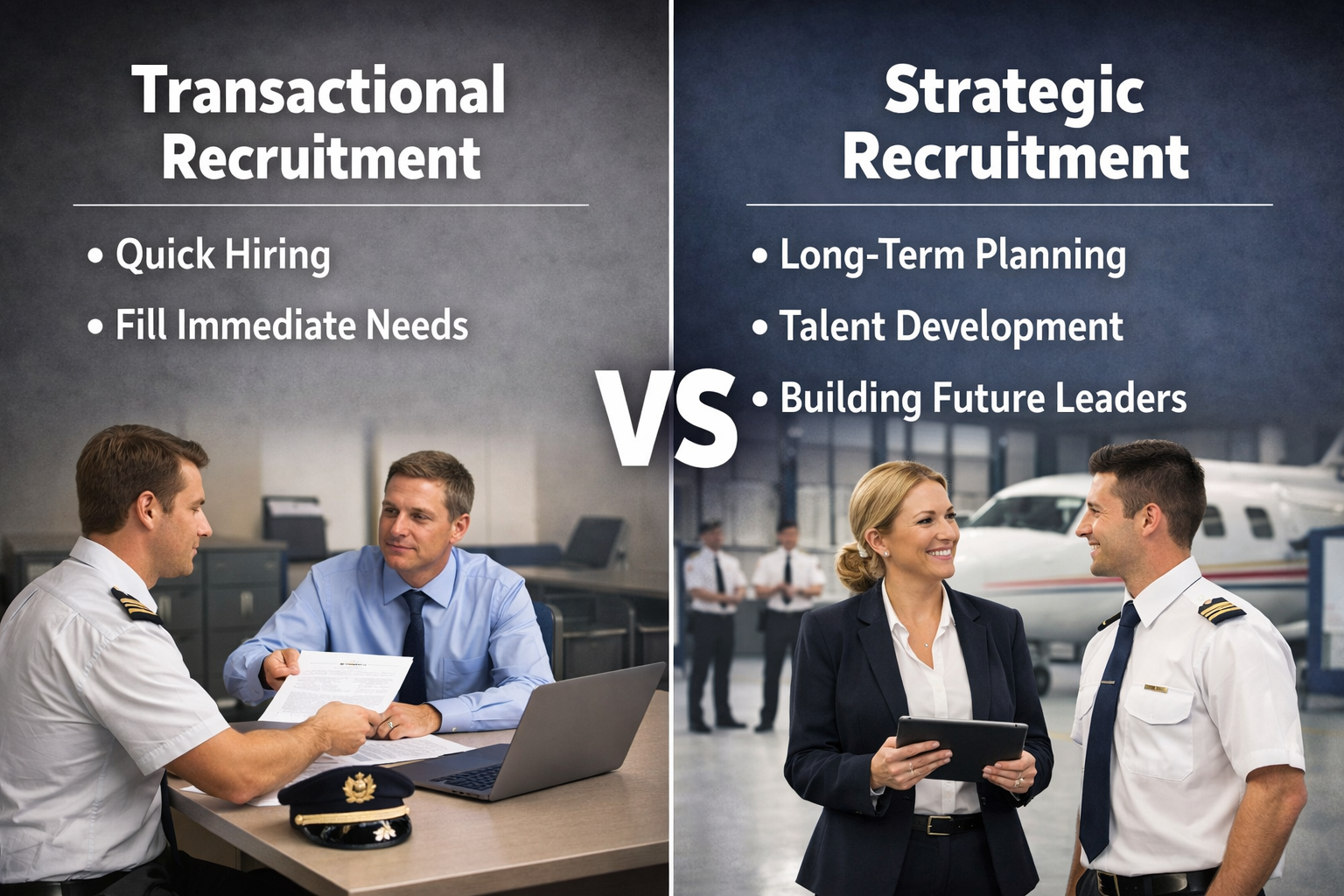
At its simplest, transactional vs. strategic aviation recruitment comes down to the difference between filling a vacancy quickly and building a long‑term talent ecosystem. Both approaches have their place, but only one positions an organization for resilience and competitive advantage.
What Is Transactional Aviation Recruitment?
Transactional recruitment focuses on immediate hiring needs. It is vacancy‑driven, reactive, and centered on short‑term outcomes. In aviation, this often looks like:
- Filling pilot, technician, or ground‑handling roles as soon as someone resigns
- Relying on job boards and generic advertising
- Prioritizing speed over alignment or long‑term fit
- Limited workforce planning or forecasting
- Minimal employer branding or candidate engagement
This approach can work when the labor market is stable and talent is abundant. Unfortunately, aviation is experiencing the opposite. Pilot shortages, aging maintenance workforces, and global competition for technical talent make transactional hiring increasingly ineffective.
What Is Strategic Aviation Recruitment?
Strategic recruitment is proactive, data‑driven, and aligned with long‑term business goals. Instead of reacting to vacancies, aviation organizations build a talent pipeline that anticipates future needs. Strategic aviation recruitment includes:
- Workforce planning based on fleet growth, retirements, and regulatory requirements
- Building relationships with candidates long before a role opens
- Strengthening employer branding and industry reputation
- Using analytics to forecast talent gaps
- Investing in training, upskilling, and internal mobility
- Partnering with specialized aviation recruitment firms
This approach transforms hiring from a cost center into a competitive advantage.
Why Transactional Recruitment Falls Short in Aviation
The aviation sector is uniquely complex. Safety regulations, certification requirements, and skill specialization mean that not just any candidate will do. This is where the limitations of transactional hiring become clear.
1. Shallow Talent Pools
Aviation roles require highly specific qualifications. Transactional recruitment often relies on broad advertising, which rarely reaches niche talent pools such as avionics engineers or type‑rated pilots.
2. Higher Turnover
When speed is prioritized over alignment, cultural fit and long‑term potential are overlooked. This leads to higher attrition, which is costly in a regulated industry where training and onboarding are extensive.
3. Increased Operational Risk
Understaffing or mis‑hiring in aviation can lead to delays, compliance issues, and safety concerns. Transactional hiring simply cannot support the operational stability aviation demands.
4. Rising Recruitment Costs
Constantly replacing employees is far more expensive than building a sustainable pipeline. Transactional recruitment often leads to repeated hiring cycles, driving up costs.
The Benefits of Strategic Aviation Recruitment
Organizations that shift from transactional to strategic aviation recruitment see measurable improvements across performance, retention, and brand reputation.
1. Stronger Talent Pipelines
Strategic recruitment builds long‑term relationships with pilots, engineers, dispatchers, and other specialists. This reduces time‑to‑hire and ensures a steady flow of qualified candidates.
2. Better Quality of Hire
By aligning hiring with organizational goals, companies attract candidates who fit both the technical and cultural requirements of the role.
3. Improved Retention
Strategic recruitment emphasizes career pathways, training, and engagement—key drivers of retention in aviation.
4. Enhanced Employer Brand
Aviation professionals gravitate toward companies that invest in people, communicate transparently, and offer long‑term growth.
5. Future‑Ready Workforce Planning
Strategic recruitment uses data to anticipate shortages, enabling organizations to prepare years in advance.
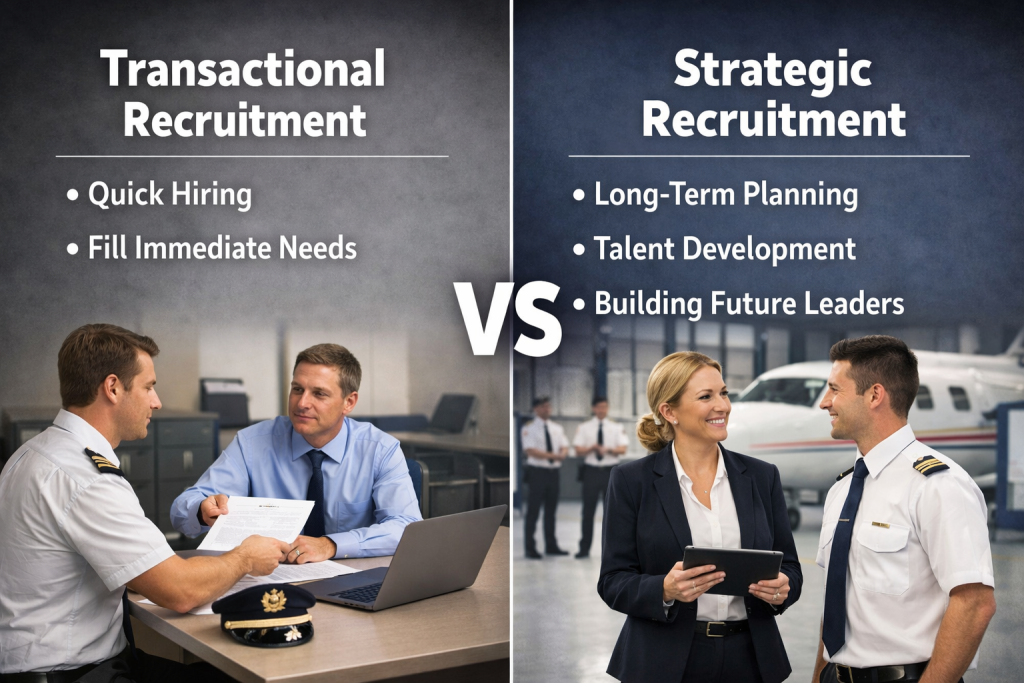
Transactional vs. Strategic Aviation Recruitment: A Side‑by‑Side Comparison
Speed vs. Sustainability
Transactional hiring fills roles quickly but often temporarily. Strategic hiring builds a workforce that supports long‑term growth.
Cost vs. Value
Transactional recruitment may seem cheaper upfront, but strategic recruitment delivers greater ROI through reduced turnover and improved performance.
Reaction vs. Proaction
Transactional hiring reacts to vacancies. Strategic hiring anticipates them.
Generic vs. Specialized
Transactional recruitment uses broad methods. Strategic recruitment uses targeted aviation‑specific strategies.
How Aviation Companies Can Shift Toward Strategic Recruitment
Transitioning from transactional to strategic aviation recruitment doesn’t happen overnight, but the payoff is significant. Here are the steps aviation organizations can take.
1. Invest in Workforce Planning
Use data to forecast retirements, fleet expansion, and regulatory changes. This allows recruitment teams to prepare talent pipelines early.
2. Strengthen Employer Branding
Aviation professionals want to work for organizations that value safety, innovation, and career development. Communicate these strengths consistently.
3. Build Long‑Term Talent Communities
Engage with candidates through newsletters, events, training partnerships, and social platforms—even when no roles are open.
4. Partner With Aviation‑Specialized Recruiters
Generalist agencies rarely understand the nuances of aviation hiring. Specialized partners bring industry knowledge, networks, and compliance expertise.
5. Prioritize Candidate Experience
A smooth, respectful hiring process improves acceptance rates and strengthens your reputation in a tight‑knit industry.
6. Develop Internal Mobility Programs
Upskilling and cross‑training reduce external hiring pressure and improve retention.
The Future of Aviation Hiring Is Strategic
As the industry continues to face global talent shortages, the debate of transactional vs. strategic aviation recruitment becomes more than a hiring preference—it becomes a business imperative. Aviation organizations that embrace strategic recruitment will be better positioned to attract top talent, reduce turnover, and maintain operational excellence.
Those that remain stuck in transactional hiring will struggle to compete in an increasingly complex and competitive landscape.
Strategic recruitment isn’t just the future of aviation hiring—it’s the key to long‑term organizational resilience.