
<p>The post How to Hire A&P Mechanics: A Complete 5 Step Guide for Aviation Employers first appeared on Aviation Careers.</p>
]]>Table of Contents
For aviation employers, keeping aircraft in the air is the ultimate goal. However, grounded planes and delayed maintenance schedules are becoming increasingly common due to a critical bottleneck: the shortage of qualified maintenance personnel. If you are wondering how to hire A&P mechanics effectively, it is no longer just an HR initiative—it is a core operational necessity.
Whether you are a commercial airline, a corporate flight department, or an MRO (Maintenance, Repair, and Overhaul) facility, securing top-tier maintenance talent requires a strategic, proactive approach. This guide covers everything you need to know to find, attract, and retain certified aircraft technicians.
How to Hire A&P Mechanics: What Is an A&P Mechanic and Why Demand Is So High
An A&P (Airframe and Powerplant) mechanic is an aviation technician who holds specialized certification from the Federal Aviation Administration (FAA). The “Airframe” rating allows them to work on the body of the aircraft, while the “Powerplant” rating covers the engines. Holding both makes a mechanic incredibly versatile and highly sought after.
When learning how to hire A&P mechanics, you must understand why demand for these professionals is currently at an all-time high, driven by two primary factors:
- The Aging Workforce: A significant portion of the current aviation maintenance workforce is nearing retirement age. As these seasoned professionals exit the industry, they leave a massive knowledge and skills gap.
- The Ongoing Shortage: The post-pandemic surge in air travel, combined with a backlog of aircraft orders and maintenance schedules, has created an intense need for technicians. Aviation maintenance technician (AMT) schools are currently struggling to pump out enough graduates to replace retiring mechanics, let alone meet the industry’s growth demands.
Key Challenges in Hiring A&P Mechanics Recruiting in the aviation maintenance sector is uniquely difficult. Employers mapping out a strategy for how to hire A&P mechanics must navigate several hurdles to secure the talent they need to keep their fleets operational.
- Strict Certification Requirements: Unlike general automotive mechanics, aviation technicians must meet rigorous FAA certification standards. This creates a high barrier to entry, naturally limiting the available talent pool.
- Fierce Competition from Airlines and MROs: Major commercial airlines and large MROs often have deep pockets, allowing them to offer massive sign-on bonuses, superior benefits, and top-tier flight privileges. Smaller operators frequently find themselves priced out of the market.
- Location Constraints: Aviation hubs are highly localized. If your operation is based in a remote area or a region with a high cost of living, convincing a mechanic to relocate can be incredibly difficult.
For a deeper dive into overcoming these industry-wide hurdles, explore our insights on Aviation Recruitment Challenges.
How to Hire A&P Mechanics and Where to Find Them
To build a robust pipeline of maintenance talent, employers need to look beyond generic job boards. A crucial step in mastering how to hire A&P mechanics requires a multi-channel approach:
- Aviation-Specific Job Boards: Platforms like JSfirm, Aviation Job Search, and Trade-A-Plane are frequented by active job seekers in the industry. Posting roles here ensures your job gets in front of a targeted audience.
- Trade Schools and AMT Programs: Partnering with FAA Part 147 certified Aviation Maintenance Technician schools is one of the best ways to secure entry-level talent. Offering apprenticeships or speaking at career days can help you build relationships with mechanics before they even graduate.
- Passive Candidates via Recruiters: The best A&P mechanics are usually already employed. Reaching out to passive candidates through professional networks like LinkedIn, or utilizing specialized aviation recruiters, is often the only way to find experienced lead mechanics or inspectors.
How to Verify Certifications and Compliance Figuring out how to hire A&P mechanics isn’t just about finding a good culture fit; it is a matter of strict regulatory compliance and safety.
- FAA License Checks: Before making an offer, employers must verify the candidate’s certificate standing through the FAA’s Airmen Certification database. This ensures their A&P license is active and free of recent disciplinary actions.
- Experience Logs: Reviewing a candidate’s logbooks and OJT (On-the-Job Training) records is crucial. You need to ensure their experience aligns with the specific airframes and powerplants in your fleet (e.g., Boeing 737s vs. Gulfstream G650s).
- Safety and Regulatory Considerations: During the interview, assess the candidate’s safety culture. Ask behavioral questions about how they handle pressure, document their work, and adhere to FAA regulations and maintenance manuals.
Salary Expectations for A&P Mechanics Compensation is the most critical factor in winning the war for maintenance talent. If your pay scale is outdated, you will lose candidates to competitors.
- Market Ranges: Base salaries for A&P mechanics have risen significantly. While entry-level mechanics might start in the mid-range, experienced technicians and inspectors command premium salaries.
- Shift Premiums and Overtime: Aviation is a 24/7 industry. Mechanics are often required to work nights, weekends, and holidays. Offering strong shift differentials and clear overtime policies is essential for attracting talent to less desirable shifts.
- Regional Differences: Pay must be adjusted for the local cost of living. A mechanic working in San Francisco or New York will require a noticeably higher salary than one in a smaller Midwestern city.
To ensure your compensation packages remain competitive, regularly review current Aviation Salary Benchmarking data.
How to Reduce Time-to-Hire for Maintenance Roles Every day an A&P mechanic role sits vacant, your operation risks delayed flights and lost revenue. Streamlining your hiring process is vital to solving the puzzle of how to hire A&P mechanics quickly.
- Pre-Vetted Talent Pools: Maintain an active database of past applicants and contractors. Having a warm pipeline of candidates who have already passed initial screenings can cut weeks off your hiring timeline.
- Streamlined Interview Process: Highly skilled mechanics will not wait around for a four-round interview process. Consolidate your interviews, conduct technical assessments efficiently, and be prepared to make offers quickly.
Learn more actionable strategies in our guide on Reducing Time-to-Hire in Aviation.
When to Use an Aviation Recruitment Agency for Mechanics Sometimes, internal HR teams simply don’t have the bandwidth or industry connections to fill technical aviation roles. Partnering with a specialized aviation recruitment agency makes sense in several scenarios:
- Hard-to-Fill Roles: If you are looking for a mechanic with a very specific type-rating or a Director of Maintenance (DOM), an agency’s deep network is invaluable.
- Contract vs. Permanent Needs: When facing a sudden Aircraft on Ground (AOG) situation or a heavy phase maintenance check, you may need temporary contract labor. Agencies can quickly deploy vetted contractors to bridge the gap without the long-term commitment of a permanent hire.
Retention Tips for A&P Mechanics Hiring a great mechanic is only half the battle; keeping them is just as important. High turnover in the maintenance hangar is costly and disruptive.
- Career Progression: Mechanics want to know they have a future at your company. Create clear pathways for advancement, such as moving from a line mechanic to an inspector, lead mechanic, or maintenance manager. Offer to pay for additional training, such as Inspection Authorization (IA) certification.
- Work Conditions and Scheduling: The physical environment matters. Invest in climate-controlled hangars, provide high-quality tooling or generous tool allowances, and prioritize safety. Furthermore, offering creative scheduling—like four 10-hour shifts or a “7 days on, 7 days off” rotation—can vastly improve work-life balance and boost retention.
Final Thoughts: Building a Reliable Maintenance Workforce Understanding how to hire A&P mechanics in today’s highly competitive market requires a blend of competitive compensation, streamlined hiring processes, and a deep understanding of aviation compliance. By tapping into the right talent pools, moving quickly when you find good candidates, and fostering a supportive work environment, you can build a reliable, highly skilled maintenance team that keeps your fleet flying safely.
Need certified A&P mechanics fast? Request pre-screened candidates today.

<p>The post How to Hire A&P Mechanics: A Complete 5 Step Guide for Aviation Employers first appeared on Aviation Careers.</p>
]]><p>The post Pilot Loss of License Insurance: 5 Proven Ways to Secure Pilot Loyalty first appeared on Aviation Careers.</p>
]]>Table of Contents
Pilot Loss of License Insurance: 5 Proven Ways to Secure Pilot Loyalty is one way that The aviation industry is currently navigating a complex era of human capital management. While technical advancements in avionics and airframe design continue to move at a rapid pace, the fundamental pillar of any flight operation remains the pilot. However, the profession carries a unique, inherent risk: the sudden and often permanent loss of a medical certificate. For a pilot, their health is not just their well-being; it is their license to practice their profession. This is why Pilot Loss of License Insurance has transitioned from a niche benefit to a cornerstone of modern retention strategies.
In an environment where poaching is common and the costs of training a new type-rated captain can exceed six figures, loyalty is the ultimate currency. If an operator can provide a safety net that protects a pilot’s livelihood against medical disqualification, they create a psychological bond that far outweighs a simple signing bonus.
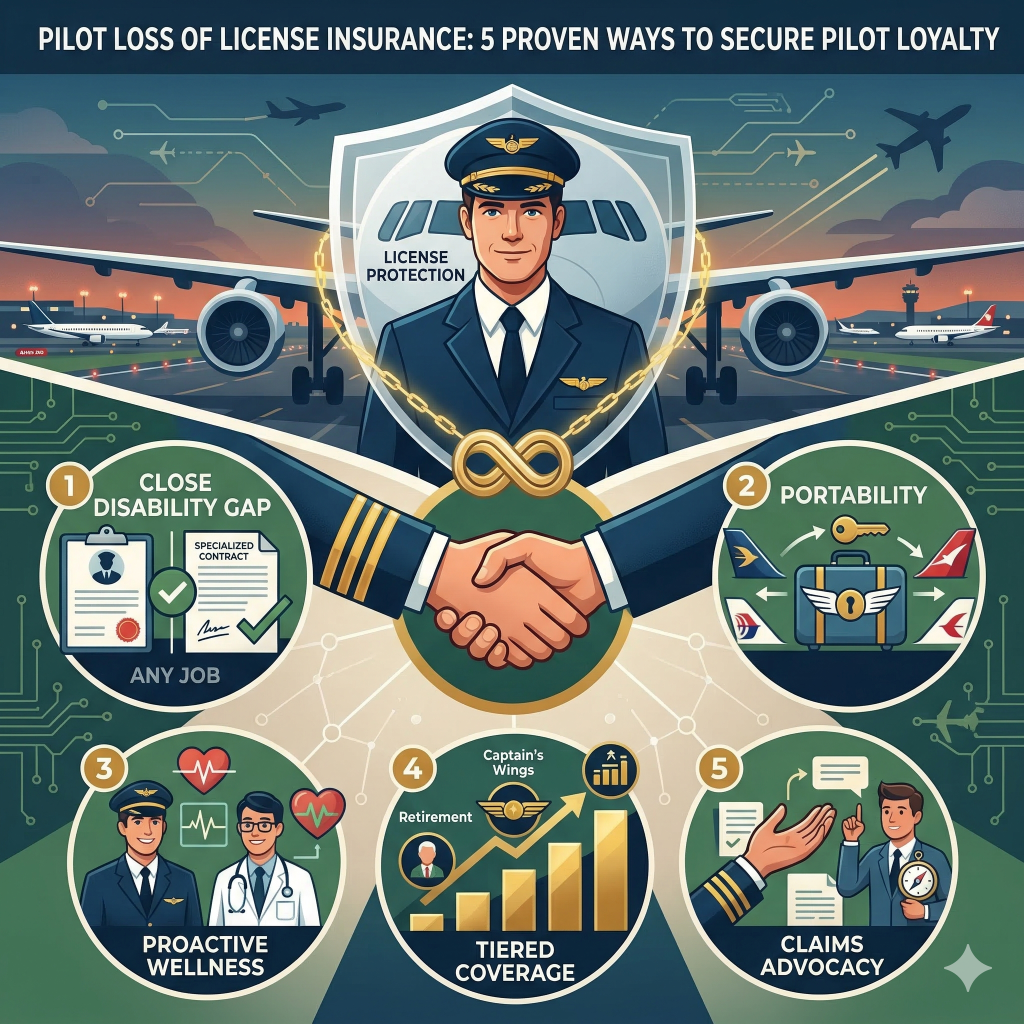
Here are five proven ways to leverage Pilot Loss of License Insurance to secure long-term pilot loyalty.
1. Close the “Benefit Gap” in Standard Disability
Most corporate or commercial group disability plans are designed for “any occupation.” This means if a pilot can no longer fly due to a minor vision impairment or a cardiovascular condition, but can still work a desk job, the standard insurance often stops paying.
To a pilot, a desk job is not a career equivalent. By offering a specialized Pilot Loss of License Insurance policy that features an “Own Occupation” definition, you demonstrate a profound understanding of their specific career risks. When a pilot knows that their employer has protected their specific ability to earn as a professional aviator—not just as a general employee—their commitment to that organization deepens.
2. Use “Portability” as a Trust-Building Tool
One of the primary fears pilots have regarding employer-sponsored benefits is the “golden handcuffs” effect. However, irony dictates that the more “open” and fair a benefit feels, the more likely a pilot is to stay.
Providing a Pilot Loss of License Insurance plan that offers a degree of portability—or at least a generous conversion option—shows that the company cares about the individual’s long-term career stability, regardless of the tail number they are flying. This transparency builds a culture of mutual respect. Pilots are highly networked; when word spreads that a company provides a robust Pilot Loss of License Insurance policy that doesn’t disappear the moment a contract is restructured, that company becomes a “destination employer.”
3. Integrate Insurance with Proactive Wellness
Loyalty isn’t just about paying out when things go wrong; it’s about preventing the “loss” in the first place. High-tier Pilot Loss of License Insurance providers often include access to specialized aviation medical examiners (AMEs) and confidential wellness programs.
By framing Pilot Loss of License Insurance as part of a “Flight Surgeon Support System,” you move the conversation from insurance to advocacy. If a pilot feels that the company is providing the tools to help them maintain their Class 1 Medical, they view the employer as a partner in their longevity. This proactive approach reduces the turnover caused by medical retirement and keeps your most experienced captains in the left seat longer.
4. Tiered Coverage as a Career Milestone
A common mistake in aviation HR is offering a “one-size-fits-all” benefit package. To maximize loyalty, Pilot Loss of License Insurance should be structured to grow with the pilot’s career.
For a First Officer, the focus should be on a base monthly indemnity to cover short-term medical issues, providing immediate peace of mind for new hires. As they promote to Captain, the policy should transition to include lump sum payouts for permanent loss of license, protecting their peak earning years. Finally, for Senior Pilots or Check Airmen, the plan can include full salary replacement and a retirement bridge. When Pilot Loss of License Insurance benefits increase at year five or year ten, it creates a tangible reason for the pilot to stay. It transforms the insurance from a static line item into a rewarded milestone of their dedicated service.
5. Simplify the Claims Advocacy Process
The period following a medical grounding is the most stressful time in a pilot’s life. If they have to fight through layers of bureaucracy to access their Pilot Loss of License Insurance benefits, the “loyalty” the company hoped to build will evaporate instantly.
To truly secure loyalty, the employer should provide a dedicated claims advocate or a streamlined interface with the insurer. When an operator says, “We will handle the paperwork so you can focus on your recovery,” they earn a level of gratitude that a salary increase cannot buy. High-fidelity Pilot Loss of License Insurance programs that pay out promptly and without adversarial hurdles become the “hero” of the pilot’s personal story, and by extension, so does the company.
The Financial Reality of Pilot Retention
From a purely fiscal perspective, the premiums paid for Pilot Loss of License Insurance are a fraction of the cost of recruitment. A single hull loss or a series of canceled flights due to manning shortages costs significantly more than a comprehensive group insurance plan.
Beyond the numbers, there is the “hangar floor” reputation. Pilots talk. In flight decks across the globe, the quality of a company’s Pilot Loss of License Insurance is a frequent topic of conversation. Being the company that “takes care of its own” during a medical crisis is the most effective marketing strategy a flight department can have.
Conclusion: A Safety Net for the Modern Aviator
The sky is an unforgiving workplace, and the medical standards required to navigate it are stringent. Pilots are acutely aware that they are one EKG or one eye exam away from the end of their career. By providing a robust Pilot Loss of License Insurance solution, you are not just offering an insurance policy; you are offering a promise of stability.
In the battle for talent, the winner won’t just be the one who pays the most per flight hour, but the one who offers the most security for the hours when the pilot is grounded. Investing in Pilot Loss of License Insurance is an investment in the very soul of your flight operations—your people.
<p>The post Pilot Loss of License Insurance: 5 Proven Ways to Secure Pilot Loyalty first appeared on Aviation Careers.</p>
]]>